
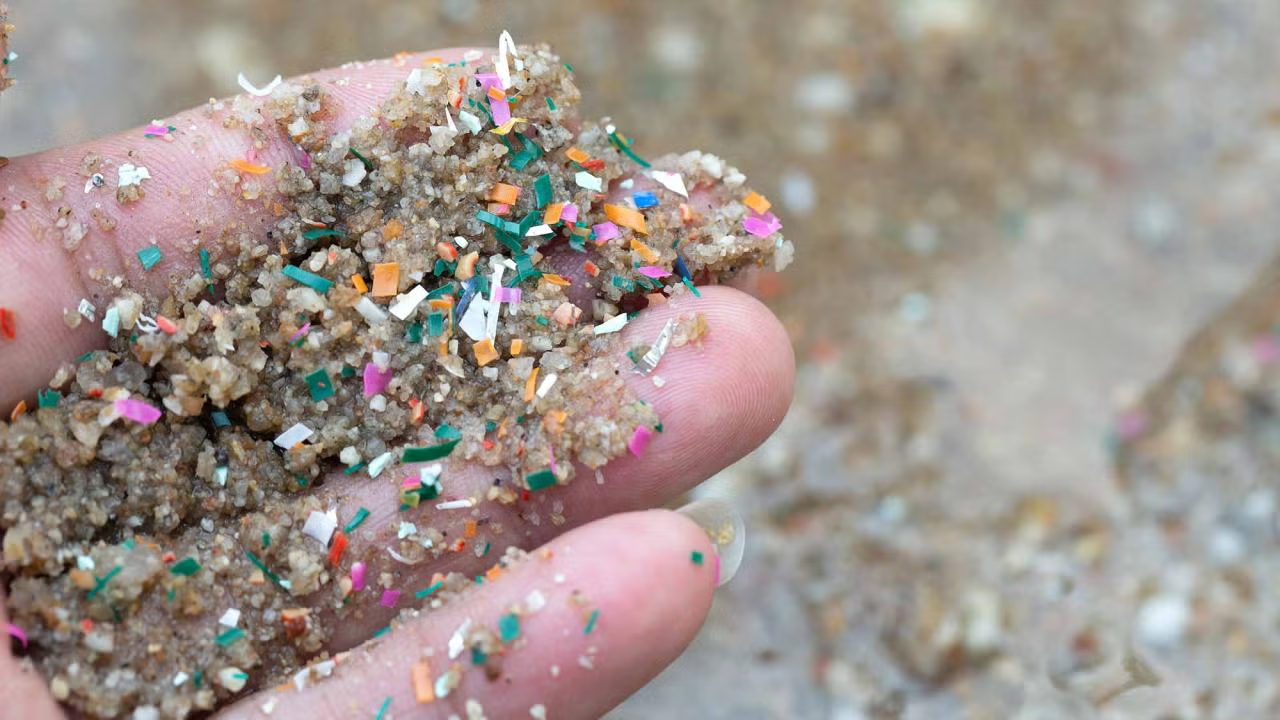

The tiny, minuscule plastics, known as microplastics, that are in the air we breathe, the food we consume, and everyday objects we use, such as plastic cutting boards, Tupperware, and even clothes, could be accumulating in our bodies.
According to a 2019 study for the World Wildlife Fund (WWF), conducted by researchers at the University of Newcastle, Australia, humans likely consume up to 5 grams of plastic every week, which is equivalent to one credit card’s worth of microplastics.
The science of microplastics
Similar to the 2019 WWF study, research published in 2021 concluded that, on average, we ingest about four micrograms of microplastic every week, which is more than a million times smaller than the Newcastle researchers measured.
Today, most of our store-bought packaging is made of plastic, which ends up in our waste bins days after purchase.
From bottles and containers to kitchen appliances like cooking utensils, wrappers, furniture, electronics such as remotes and protective cases, toiletries, cosmetics, and even kids’ toys, these items are made of these plastics.
According to the Center for International Environmental Law (CIEL), more than 99 per cent of plastic comes from chemicals made from fossil fuels, with gas in the United States as the main source of plastic production.
While studies have shown that it is quite easy to make plastic with the right tools, it is also the hardest material to dispose of because of its long decomposition time.
Over the years, plastics have been piling up since their inception, making it harder to dispose of them due to overproduction and their unnatural composition.
According to Chariot Energy, a Texas-based electricity company, plastics can take 20 to 500 years to decompose, depending on their composition and how much sunlight they receive.
This is known as photodegradation, and you often see plastic materials piled up outside landfills to speed up the process.
A single-use plastic grocery bag, for instance, takes approximately two decades to fully break down, according to Chariot Energy.
“And we all know that microplastics are bad news, and we don’t even know yet how harmful they are to the ecosystem or ourselves,” said Tony Walker, assistant professor at Dalhousie University’s School for Resource and Environmental Studies in Halifax, in an interview with CBC News.
How much microplastic is in us?
It is difficult to know for certain how much plastic people consume each week, as it depends on the individual’s diet and lifestyle, but any amount of plastic in our bodies is unhealthy and a cause for concern.
Earlier this year, investigative reporting by The Guardian cast doubt on the presence of microplastics throughout the human body, suggesting that the researchers’ study may be in error and that plastics in the body cause less harm than some say.
While there is little doubt that plastic pollution is present in the food and drink we consume and the air we breathe, the health damage is unclear, as reported by The Guardian.
The ubertaintly are a “bombshell”, Roger Kuhlman, a chemist formerly at the Dow Chemical Company, told The Guardian.
“This is really forcing us to re-evaluate everything we think we know about microplastics in the body. Which, it turns out, is really not very much. Many researchers are making extraordinary claims, but not providing even ordinary evidence,” Kuhlman told the U.K.-based news organization.
For its part, the WWF says that science is most likely to improve over time and that no amount of ingested plastic is safe.
“We still don’t know how much plastic ingestion is safe for humans,” said John Duncan, WWF’s No Plastic in Nature Initiative Lead, in an email statement to the Calgary Journal.
“Although,” he added, “there is growing agreement amongst a broad group of scientists that plastics are responsible for significant harms to human health, the economy, and the earth’s environment.”
Read more of the Calgary Journal’s fact-checking reporting here.
Learn about our method and process for fact-checking here.
If you have an idea for a fact-check, contact us.